Water Softener and Filtration in Azusa, CA: Hard Water, Drinking Water and the Equipment for Each
Groundwater hardness in Azusa Light & Water's 2025 report runs from 99 to 260 mg/L, averaging 141, which is moderately hard to hard by the usual scales. If you see chalky spots on glass, scale on a showerhead or a water heater that rumbles, that report is why.
Hard water and drinking water are different problems with different equipment. This page sorts out what a softener does, what a filter does, when reverse osmosis fits and what the city does and does not do for you.
Call (626) 687-0217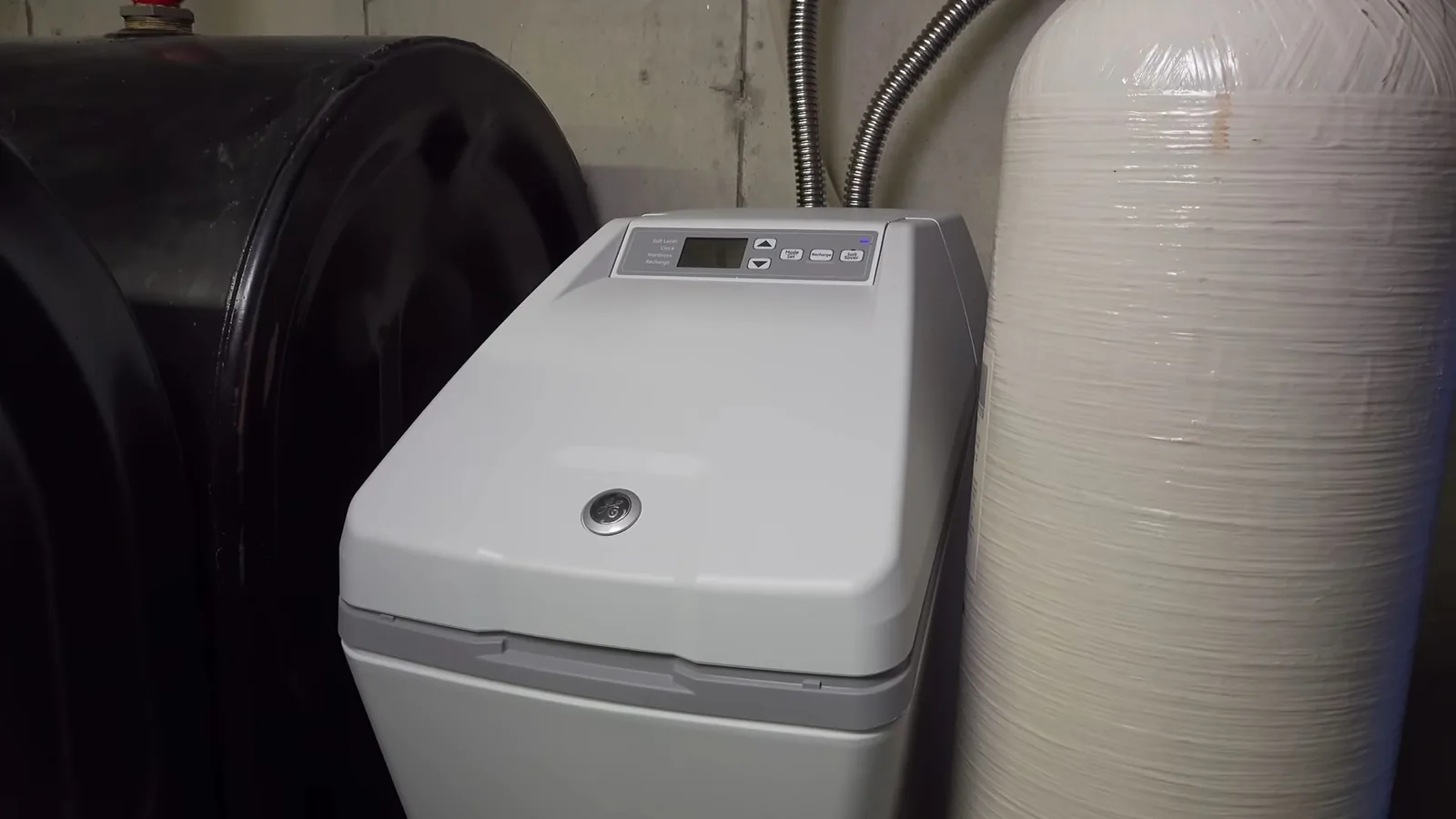
Do you need a softener?
The utility's 2025 consumer confidence report lists groundwater hardness of 99 to 260 mg/L and surface water at 100 mg/L. Divide by 17.1 and that is about 5.8 to 15.2 grains per gallon for the groundwater, around 8.2 on average, and just under 6 for the surface water. Which blend reaches your tap depends on the part of the system and the time of year, so your own water can sit anywhere in that range.
Nothing in the report recommends a softener, so we make no such claim. It is a choice about scale, spots and the life of fixtures and appliances. If scale keeps coming back on a water heater, see water heater repair, since a hard-water tank often needs a flush.
Hard water signs and how to test
The signs are familiar: white crust at faucet tips, cloudy glasses from the dishwasher, soap that does not lather, stiff laundry, and scale that builds in a kettle or a showerhead. A tank water heater that rumbles or runs out sooner is another sign, because scale collects on the tank floor.
- Look first: aerators and showerheads show scale earlier than anything else.
- Test strips or a drop kit: inexpensive hardness tests give a reading in grains per gallon.
- Ask the utility: Azusa Light & Water at (626) 812-5225 can tell you what is in the system for your area.
- Ask the plumber: a plumber can test at the tap and explain what the number means for equipment.
Softener, filter or both?
| Equipment | What it does | What it does not do |
|---|---|---|
| Water softener | Removes hardness minerals by ion exchange, using salt to regenerate | Does not filter chlorine taste or particles |
| Whole-house filter | Reduces sediment and some tastes or odors as water enters the house | Does not soften |
| Under-sink filter | Treats drinking and cooking water at one tap | Does not protect pipes or heaters |
| Reverse osmosis | Pushes water through a membrane for a dedicated drinking tap | Wastes some water and treats only that tap |
Think about what bothers you. Scale and spots call for softening. A taste or odor calls for a filter. Many homes end up with two pieces of equipment, one for hardness and one at the kitchen tap.
Sodium and your drinking water
The city's report shows sodium of 23 to 31 mg/L in groundwater and 40 mg/L in surface water. A salt-based softener swaps hardness minerals for sodium, so softened water carries more sodium than what comes in. That is why many installs keep a separate unsoftened drinking tap or add reverse osmosis at the kitchen sink. Anyone on a sodium-restricted diet should ask their doctor and tell the plumber before the install.
Softener installation
A softener is installed on the main line after the point where the water enters the house, usually in the garage or on the side of the house. The plumber needs a drain for the regeneration discharge, an outlet for the control head and room for the brine tank. A bypass valve lets you isolate the unit for service.
Ask where the outdoor hose bibs will be fed from, since many people prefer unsoftened water outside. Ask also whether the install needs a permit; the permit counter on (626) 812-5234 can say whether one applies. The city does not publish equipment guidance on softeners, so the plumber's written scope is the document that counts.
Salt, brine and regeneration
A softener holds resin beads that capture hardness minerals. When they fill, the unit regenerates: it flushes a salt solution from the brine tank through the resin, rinses and starts over. That is why a softener uses salt and a drain. Check the salt level every month or two and keep it above the water in the tank.
Service questions follow a pattern. A bridged salt crust, a clogged injector, a worn control valve or resin that has reached the end of its life account for most problems. Replacing or resetting a control valve is a service call, and a plumber can tell you whether the tank is still worth fixing.
Reverse osmosis and under-sink filters
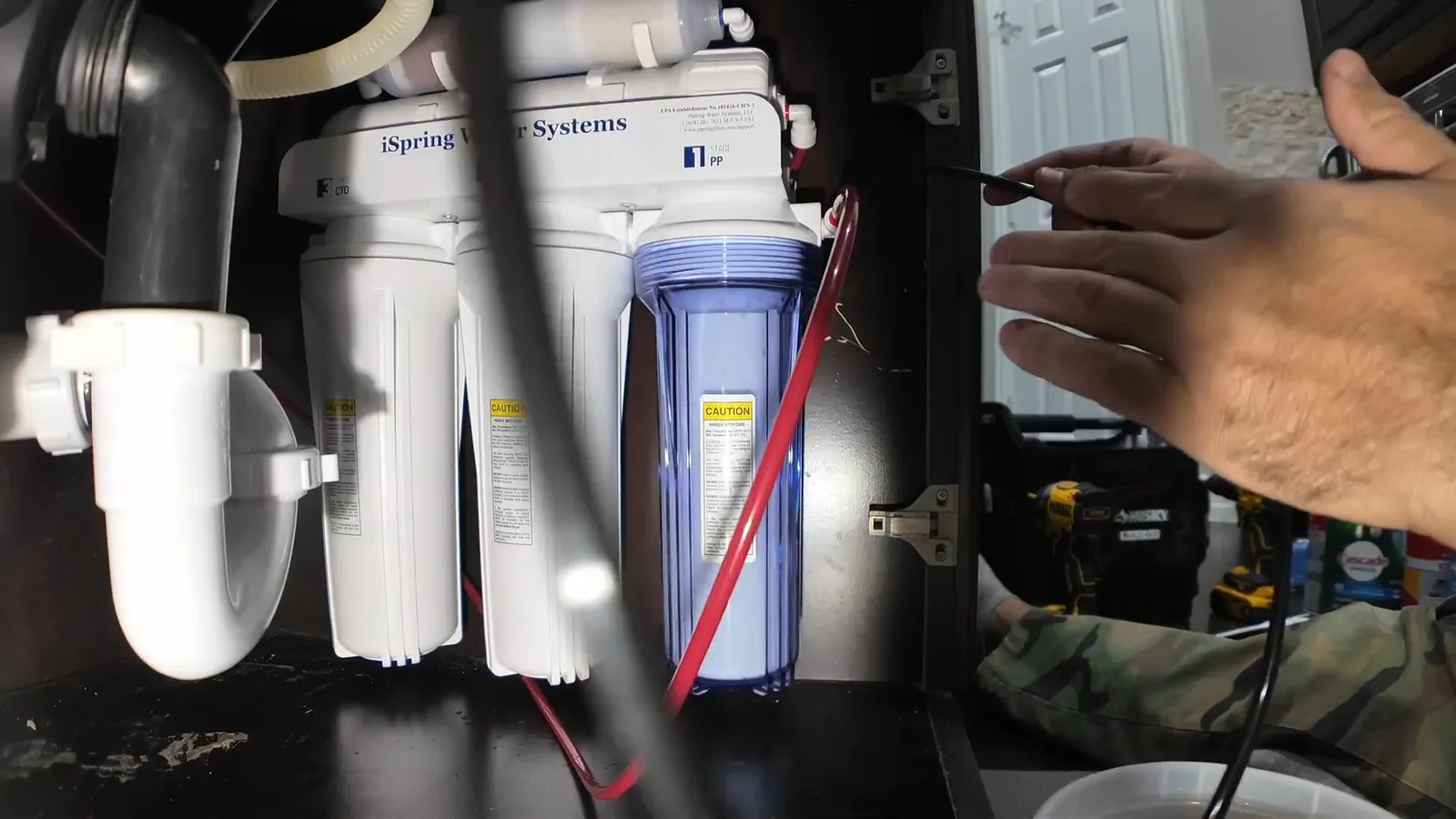
An under-sink unit treats water at one tap. A reverse osmosis system adds a membrane, a small storage tank and a separate faucet. It needs a cold-water connection, a drain connection and space under the sink. Cartridges and membranes wear out and have to be changed on a schedule, which is the maintenance that people forget. Ask for the schedule in writing, along with which parts are consumables.
Whole-house filtration, and where the utility's job ends
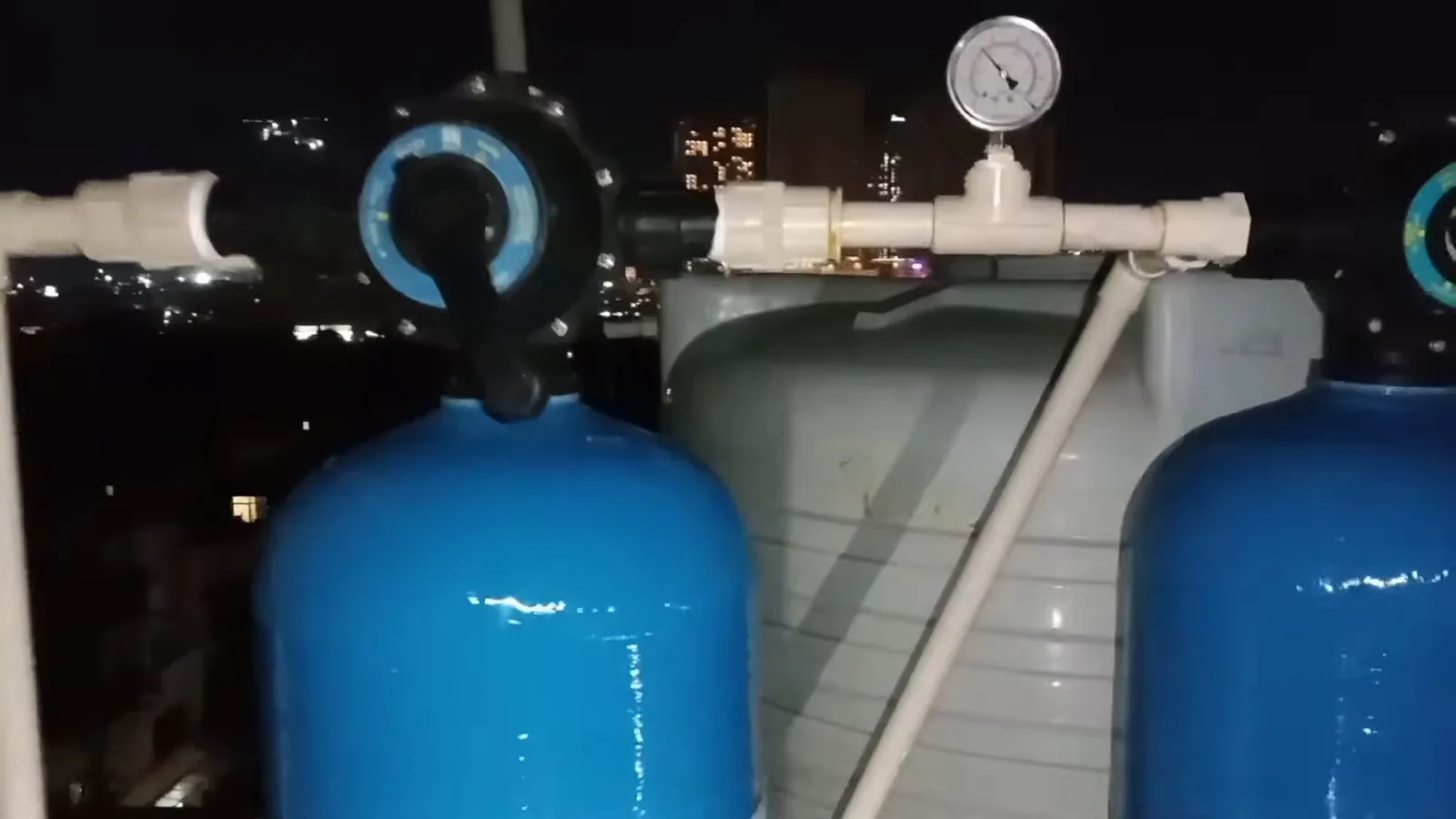
A whole-house filter protects fixtures and appliances from sediment and reduces some tastes and odors. It sits on the main line, and its cartridge has to be replaced on schedule. Treatment inside the home is a choice the owner makes, and the plumber's job is to fit it correctly and explain what it does.
The utility's job ends at the water it delivers. It supplies and tests the water and publishes the results each year, and does not install or service equipment inside the house. For what a visit costs, read the cost explainer, and for after-hours help use the dispatch information.
Softener and filter questions
How do I know if I have hard water?
Look for white scale on faucets and showerheads, spots on dishes, soap that does not lather and a water heater that rumbles. Azusa Light & Water's report lists groundwater hardness of 99 to 260 mg/L. A test kit or a plumber's tap test gives your own reading.
Can a water softener valve be replaced without replacing the whole unit?
Often yes. The control valve and the resin tank are separate parts, so a worn valve can be replaced or reset on its own. A plumber can tell you whether the rest of the unit is worth keeping.
Does a softener make my drinking water unsafe because of sodium?
A salt-based softener raises sodium, and the amount depends on how hard the incoming water is. Many homes keep an unsoftened drinking tap or add reverse osmosis. If you follow a sodium-restricted diet, ask your doctor and mention it to the plumber.
Can a water softener be installed without a plumber?
A softener needs a drain connection for the water it discharges, a bypass valve, an outlet for the control head and a tie-in to the supply line at a point that treats the whole house. Cutting into the supply line and routing the drain are plumbing work, and a poor connection can leak for months before anyone notices. Ask whoever installs it how the drain and the bypass will be set up.
Questions about hard water? Talk to a plumber
Call the dispatch line any hour. It routes you to a plumber in our network who serves Azusa.
Call (626) 687-0217 Contact details