
Emergency Slab Leak Detection in Azusa, CA: A Warm Floor Spot Is a Warning
A patch of floor feels warm underfoot, you hear water running when nothing is on, or the meter will not stop even though the faucets are dry. When a pipe under a concrete floor lets go, the water has nowhere to drain, so it can lift flooring and soak the base of the walls.
The decisions are what to confirm first, how the repair is chosen, and what paperwork to keep. Each is covered below, in the order you will meet them.
Call (626) 687-0217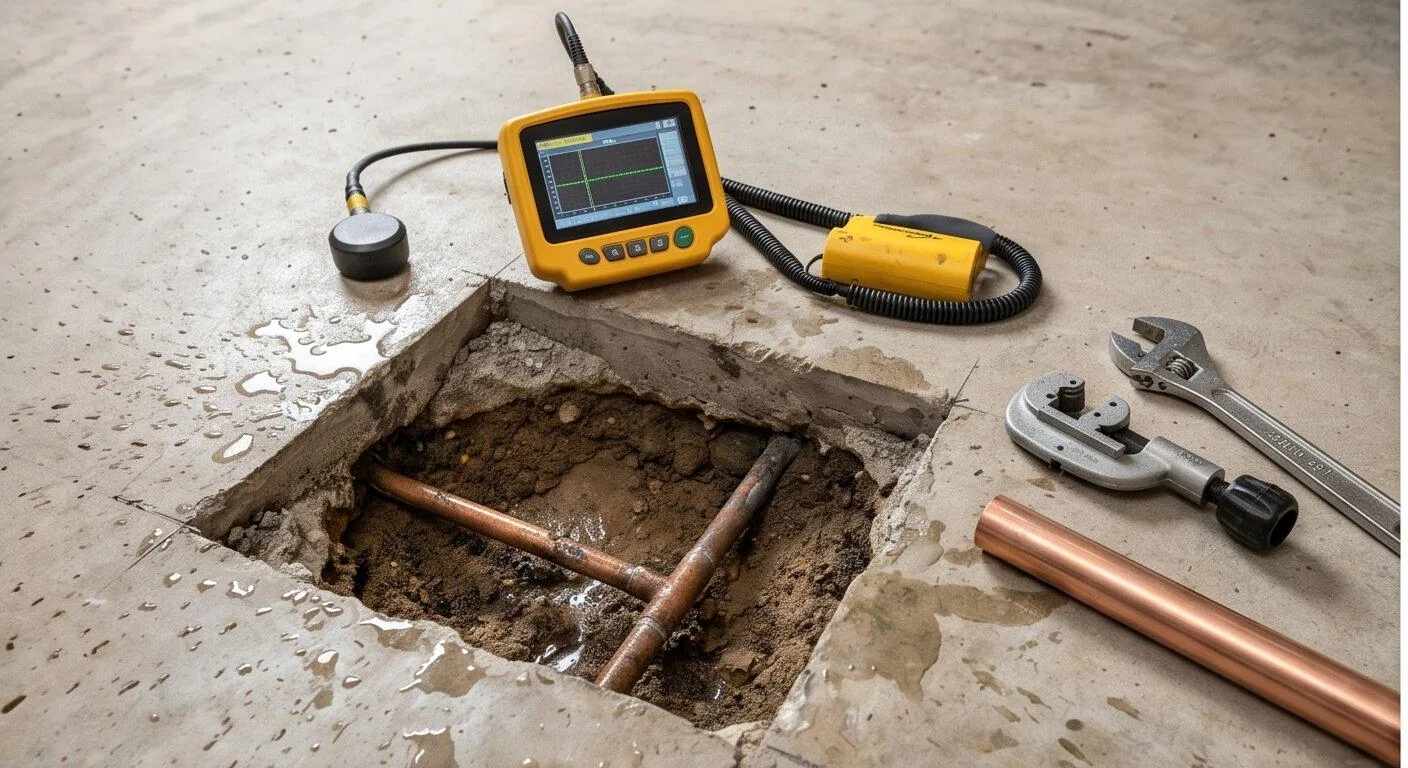
Signs the leak is under the slab and not in a wall
A warm spot on the floor
Hot-water lines run warm even when the water is off. A fixed patch of warmth that is not near a vent is the classic sign.
Running water you cannot place
A faint hiss or rush at night, with every fixture off, usually means water escaping under pressure.
Low pressure or a higher bill
A drop in pressure on one side of the house or a bill that rises without a reason is worth a meter test.
Damp floors and baseboards
Dark patches on carpet, cracked grout, swollen baseboards or a musty smell near an outside wall.
Confirming it before anyone cuts concrete
Cutting a slab is expensive and disruptive, so the confirmation stage matters more than any tool. A careful visit follows an order.
- Meter test. With every fixture off and the main valve at the house closed, a moving dial points to the line between the valve and the meter instead of the slab.
- Hot or cold? Turn off the water heater supply for a short test. If the warm spot cools and the meter slows, the leak is on a hot-water line.
- Isolate the line. The plumber caps and pressure-tests individual lines to learn which one is losing pressure.
- Locate the spot. Acoustic listening, an electronic locator or thermal imaging marks the position on the floor, usually within a small area.
- Photograph and record. Marked locations, readings and photos are the paperwork you will need later.
Spot repair, reroute or repipe: how the decision gets made
| Option | What it involves | When it tends to fit |
|---|---|---|
| Spot repair through the slab | The floor is opened over the marked point, the pipe is repaired, concrete and flooring are patched. | One leak, good access, lines otherwise in sound condition. |
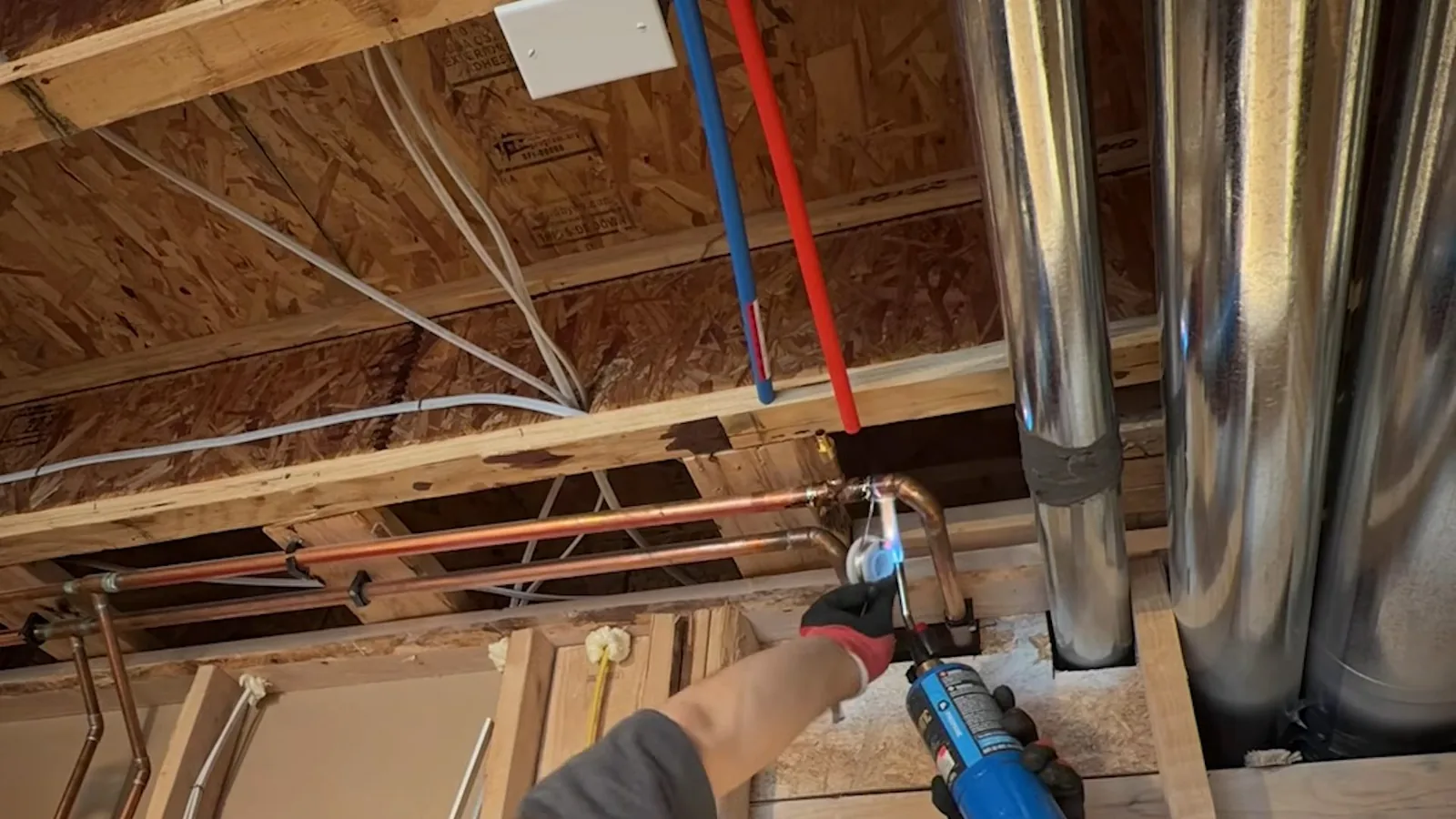
| Reroute overhead | A new line is run through the attic or walls and the leaking section is abandoned. | The leak is hard to reach, or the plumber wants to avoid cutting finished floors. |
| Repipe the affected lines | Replacement of the supply lines, usually also routed outside the slab. | Repeated leaks or corroded lines; compare with whole-home repiping. |
Ask the plumber which option they recommend and what would change their mind. The honest answer depends on what they find, not on a standard package.
Homes here, and what the sources do not say
Azusa's housing element, the city's planning document, counts 14,651 housing units, and about 68% of them were built between the 1950s and the 1980s. Homes of that age have had decades of water pressure, hot-water cycling and soil movement acting on their lines.
What the city and utility pages we read do not say is which pipe material or foundation type dominates. We have not found a source that does, so this page makes no claim about either. Ask the plumber to identify the pipe material at the leak, because that, more than the age of the house, steers the repair.
About 47.9% of Azusa households rent, per the same document. If you rent, report a suspected slab leak to the owner in writing first. Leaks under a floor are rarely something a tenant authorizes alone.
Permits, flooring and paperwork
Before work begins, ask whether the repair needs a city permit, and who pulls it if so. Rerouting or replacing lines is more likely to need a permit than a single spot repair, and a permit often brings an inspection before the floor is closed, but the city's permit desk, reached at (626) 812-5234, gives the answer for your address.
Ask how flooring will be protected or restored and who is responsible for the patch. If the Building Division requires a permit, expect an inspection before the floor is closed again. A leak under tile or hardwood can leave a visible repair even when the pipe work is clean.
Keep these for an insurance claim
- Dated photos of the damage before and after drying.
- Meter readings from the test.
- The plumber's written note of where the leak was found and what was repaired.
- The plumber's invoice, with the scope described in words.
Ask your insurer what it requires before work starts. We cannot tell you what a policy covers, and neither can the plumber.
Call now or schedule it
A faint warm spot with a steady meter can wait for a visit this week. For after-hours service see the dispatch information on the homepage. If the leak has already wet the floor, drying and mold testing is a separate step that starts after the leak is stopped.
What people ask about a leak under the floor
Do I need a plumber for a suspected slab leak, or can I find it myself?
You can confirm that water is leaking with the meter test, and you can notice warm spots and sounds. Finding the exact spot needs listening equipment, pressure testing and often a locator, because the pipe is under concrete. A plumber also decides whether the line can be repaired in place or should be rerouted.
What are the signs of a slab leak?
A warm spot on the floor, running water you cannot trace, low hot-water pressure, a higher bill, damp carpet or baseboards, and a musty smell. One sign alone is not proof. Two together, plus a meter that moves with everything off, make it likely.
What do tunneling, rerouting, epoxy and lining mean?
Tunneling digs under the slab from outside to reach a pipe without cutting the floor. Rerouting abandons the leaking line and runs a new one overhead. Epoxy and lining coat the inside of a pipe to seal it. Each suits certain pipes and situations, so ask which one the plumber means and why it fits yours.
Should I get a second opinion before the slab is opened?
A second look is reasonable when the plan involves breaking concrete or rerouting a line. Ask each plumber how the leak was located, which repair method is proposed and why it suits your pipe, and which finishes would have to be redone. Two plans that agree on the location and the method are more reassuring than two that disagree on where the leak is.
Warm floor or wet baseboards? Call now
Call the dispatch line any hour. It routes you to a plumber in our network who serves Azusa.
Call (626) 687-0217 Contact details