
Water Line Repair in Azusa, CA: Where the City's Line Ends and Yours Begins
A wet patch in the yard does not always mean a broken water line, and weak pressure does not always mean a leak. The line that carries water from the street to your house is buried, so the signs are indirect, and the fix depends on which side of the meter it sits on.
This page covers how to read the signs, where the utility's responsibility stops, how repair and replacement are chosen, and the dig-safety call that comes before any trench.
Call (626) 687-0217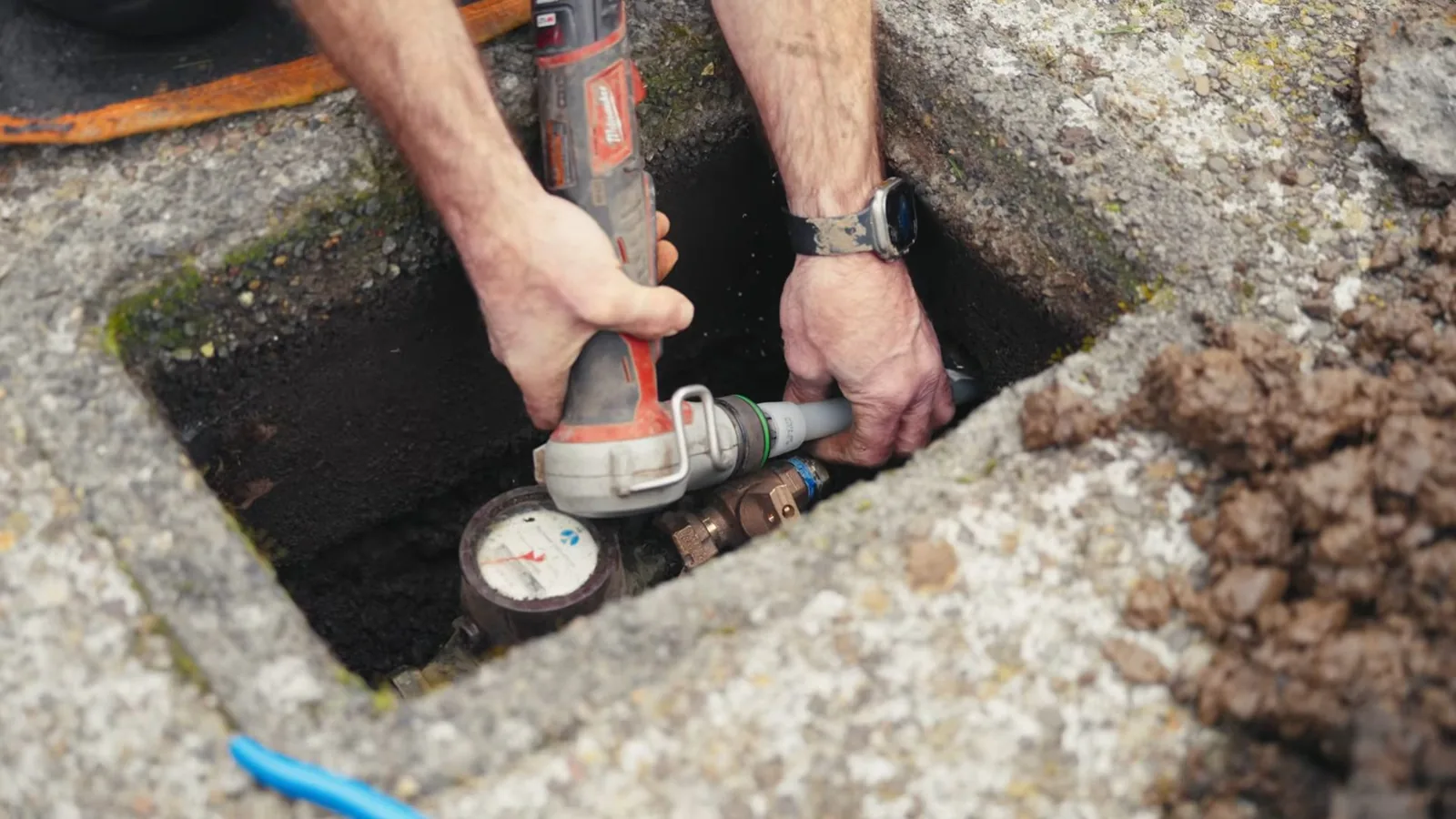
Where the utility's line ends and yours begins
Azusa Light & Water delivers water to the meter. Responsibility for the pipe from the meter to the house, and everything inside, falls to the property owner. That boundary decides who fixes a leak and who pays, so confirm it for your address before work starts by calling the utility at (626) 812-5225.
A leak before the meter is the utility's matter. A leak after it is yours, and that is where the plumbers in our network come in. If you are unsure, ask the utility to look at the meter; a moving dial with everything off tells you water is escaping, though not on which side.
Signs of a failing water line
| Sign | What to do first |
|---|---|
| A soggy or sunken patch of ground | Photograph it; check whether it is near the line's path from the meter. |
| Pressure that dropped over days or weeks | Ask neighbors, then check the regulator and shutoff valve. |
| A water bill that jumped | Run the meter test: every fixture off, watch the dial. |
| Brown or cloudy water | Call the utility; its FAQ says rusty pipes are the usual cause. |
If the meter dial turns with every fixture off, the next step is locating a hidden leak before any digging is planned.
Repair, replacement or a new route
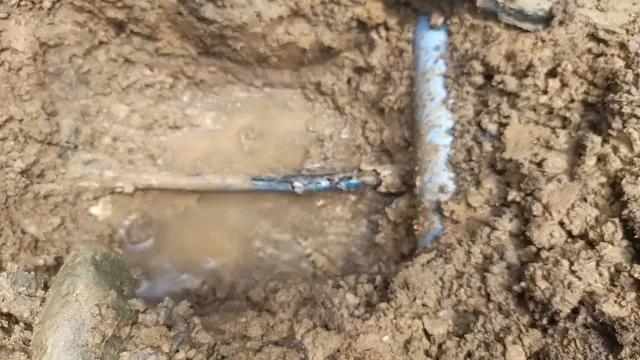
A short repair at a joint or a coupling is practical when the pipe around it is sound. Replacement is the better question when the same line has leaked more than once, when it is long, or when it is made of a material that is worn out. A reroute, laying a new line along a different path, can avoid a driveway or a tree.
The plumber should show you the damaged section, say how long the line runs, and describe how the trench will be opened and closed. Ask whether they will pressure test the line before it is covered, and who restores the surface afterward. We do not quote figures here; the what drives the final number page lists what moves the bill.
Pressure trouble: regulator, valve or the line itself
Not every pressure complaint is a line problem. High pressure shows up as banging pipes, leaking fixtures or a relief valve that weeps, and it often traces to a pressure-reducing valve at the house that has worn out. Low pressure can come from a half-closed shutoff valve, a clogged fixture, old piping inside the house or lime deposits, which the utility's FAQ also lists.
- Is the pressure low at every tap, or only one?
- Did it change when a neighbor's did?
- Is the main shutoff fully open?
- Has a regulator ever been installed, and where is it?
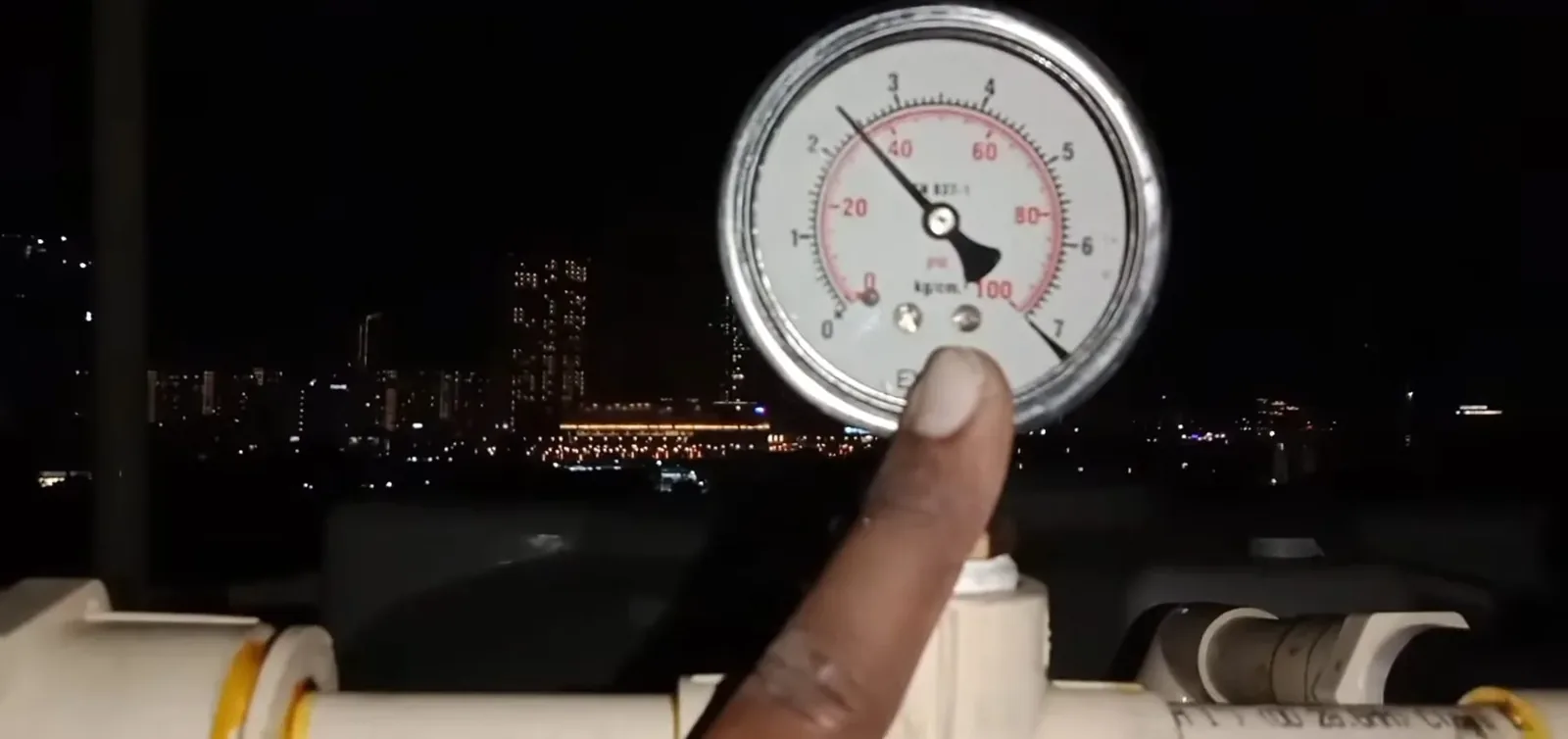
A plumber can fit a gauge to a hose bib and read the number in minutes, which separates a regulator fix from a line replacement. If the cause is old piping inside the house, repiping is the related page.
Before anyone digs: 811 and permits
Before a trench opens, state law requires a call to 811, the DigAlert center, no sooner than 14 calendar days ahead and at least two working days before the dig starts. The call brings utility locators out to mark buried lines so a trench does not strike gas, power or communications.
Ask the plumber who makes the call and whether the marks are in place before the start date. Work in the public street or sidewalk involves the city's Public Works rules as well, and a call to the permit counter, (626) 812-5234, settles whether a given job needs one.
Find your main shutoff before you need it
Every household should know where the water can be stopped. The main shutoff is usually where the line enters the house, often by an exterior wall, in a garage or near the water heater. A second valve sits at the meter box, but that one belongs to the utility, so use the house valve. If you cannot tell the two apart, the utility at (626) 812-5225 can confirm which is which.
Turn it fully off and on once a year to make sure it moves. A valve that is stuck or leaks around its stem is a small repair that is far easier to do on a calm afternoon. For a leak that cannot wait, the after-hours dispatch section of the homepage explains how calls are handled.
Water line questions
Can an underground water main leak under concrete be found without breaking it?
Usually yes. Acoustic listening gear, tracer gas and thermal tools can locate a leak before anyone cuts the slab. See the leak location services page for how that works. The plumber should give you the location in writing before work is opened.
Why is my water pressure low, and is it the line?
Check whether every tap is affected and whether neighbors have the same issue. The utility's FAQ names old plumbing, an old meter and lime deposits as common causes. A gauge reading separates a failing line from a regulator or valve problem.
What is the main water line, and is it the same as the service line?
The main water line is the pipe from the street meter to your house. People also call it the service line or the yard line, and plumbers use the terms loosely. Confirm which section is meant before approving work.
How can I tell if a buried line is leaking?
Look for soggy ground, a sunken patch or growth that is greener than the rest, and watch the meter with every fixture off. A moving dial means water is escaping somewhere. A plumber then confirms the location before digging.
Pressure dropped or yard soaked? Call now
Call the dispatch line any hour. It routes you to a plumber in our network who serves Azusa.
Call (626) 687-0217 Contact details